In a Fast World, Slow Is the New Luxury (+ What This Means for The Coaching Industry)
Have you ever noticed how time seems to be speeding up?
Years feel like months. Months feel like weeks. Weeks disappear in the blink of an eye.
It’s easy to assume this feeling is just a fluke. Maybe we’re getting older? Maybe we’re busier? Hmmm.
But something deeper is actually happening.
The gap between idea and result is collapsing. Fast.
Technology has always been about compressing time. Every major innovation shortens the distance between intention and outcome. And the more technology advances, the more dramatically that timeline shrinks.
The Horse and Buggy Example
Imagine needing to travel from North Carolina to California in the 1800s.
You would load up a horse and buggy and begin a long, uncertain journey across the country. The trip could take weeks. Possibly months depending on weather, terrain, and obstacles.
Now imagine making that same trip today.
You open your laptop.
You book a flight in five minutes.
You arrive across the country in a few hours.
The timeline has collapsed.
What once required enormous effort, time, and risk now happens almost instantly.
Transportation is just one example.
Communication Has Collapsed the Timeline
Not long ago, sending a message across the world meant writing a letter and waiting weeks for it to arrive. Then waiting weeks to recieve a letter back from the person you sent it to.
Today you can send a message instantly.
You can hop on a video call with someone on the other side of the planet within seconds.
The timeline collapsed.
Information Has Collapsed the Timeline
For most of human history, knowledge was slow.
If you wanted to learn something, you had to find a teacher, travel somewhere, or locate a rare book.
Today information is immediate. Entire libraries live inside your pocket. Answers appear in seconds.
The timeline collapsed.
Business Has Collapsed the Timeline
Starting a business once required infrastructure.
Office space.
Employees.
Inventory.
Capital.
Today someone can start a business with a laptop and an internet connection.
The timeline collapsed.
The Compression of Time
When timelines compress, life feels faster. It’s not just that things are moving quickly. It’s that the delay between action and result keeps shrinking. You send a message and receive a reply instantly. You publish something online and people across the world can see it immediately. You create something and it can reach thousands of people within minutes. Human civilization has always been moving toward greater speed.
And artificial intelligence is accelerating that trend even further.
The Return to Slowness
But interestingly, the faster the world becomes, the more I find myself valuing slowness. Not as resistance to technology. But as a deliberate counterbalance to it.
Slow writing.
Lately I’ve started drafting my blogs, sales pages, website copy etc longhand in a notebook, writing in cursive before typing them into my computer. That's how this piece started off. There’s something grounding about letting thoughts move at the speed of a pen instead of the speed of a keyboard.
Slow communication.
Instead of sending another quick text to my family, sometimes I send a postcard. A letter. Real handwriting. Real stamps. Real mailboxes.
Slow design.
Before opening Canva, I sketch ideas on paper. Rough shapes. Layouts. Concepts. Letting creativity unfold slowly before it becomes digital.
Slow learning.
Reading the entire book instead of asking AI to summarize it into ten bullet points.
Turning pages. Sitting with ideas. Letting them take root.
Slow interactions.
Meeting a client at my favorite local coffee shop instead of hopping on another Zoom call.
Hosting an in-person workshop where people can shake hands, laugh together, and learn in the same room.
In a world that constantly pushes for speed, slowness becomes a luxury.
It becomes spacious, intentional and human.
A New Definition of Luxury
Business prediction: I believe we’re about to see a major shift in what people consider "premium".
For the last twenty years, luxury has often meant speed, convenience, and efficiency.
Faster shipping.
Faster service.
Faster results.
But as speed becomes the default, something else starts to become rare.
Slowness.
Presence.
Authentic human interaction.
Analogue experiences.
These will become some of the most valuable things in the modern AI economy.
A handwritten note instead of another email.
A real conversation instead of a text thread.
A small in-person workshop instead of a giant webinar.
A carefully crafted experience instead of mass automation.
These things take time. They require presence. They can't be rushed or mass-produced.
Which means they will become scarce. And scarcity creates value.
In the future, slowness itself may become a category of premium offers. Connection will become the new currency. So I guess what I'm saying is... welcome to The Oxytocin Economy.
Reflection Questions
- Where in your life have things started to feel too fast?
- What is one part of your work or life you could intentionally slow down?
- What kinds of slower, more human experiences do you think people will value most in the future?
Be free,
Melynda
P.S. If the idea of slowing down resonates with you, here are two ways we could actually practice it together.
-
If you live in Jacksonville, Florida, let’s meet up at a coffee shop and hang out for a while. No rush. Just a real conversation.
-
Send me your mailing address and I’ll send you a handwritten letter.
To set either of these experiences up, just send me a DM on LinkedIn.
Yes, I realize the irony here. xoxo
Author
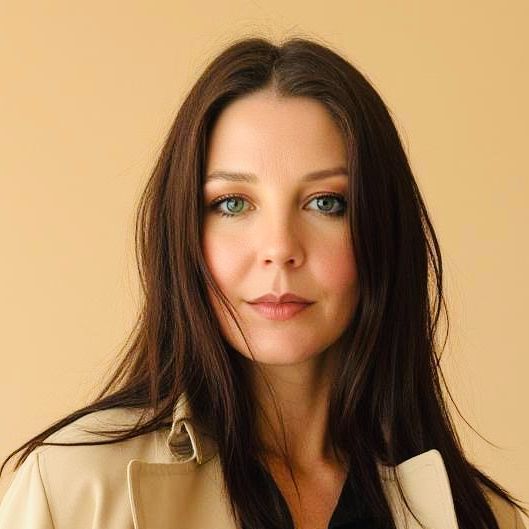
Melynda Smith
Author
I help coaches, consultants and course creators create infinitely scalable, lifestyle first, WFA (work from anywhere), profitable businesses.
Categories
All CategoriesRecent Posts
